



İsveç - Polonya: yapay zekâ tahmini


Yapay zekâ tahmini
Yapay zekâmız bu maçı analiz etti. Tahmini ve tüm marketleri açın:
- Maç sonucu (1X2)
- Kesin skor
- Karşılıklı gol
- 2,5 gol alt/üst
- 1,5 ve 3,5 gol alt/üst
- Çifte şans
- Gol yememe
- Tam yapay zekâ analizi ve güven oranı
Maçtaki kartlar
Hakem: Javier Alberola Rojas · Toplam kart: 4 · Penaltı: 0
| Sarı | Kırmızı | Faul | |
|---|---|---|---|
| Sweden | 1 | 0 | 8 |
| Poland | 3 | 0 | 9 |
Tahmin ve sonuç: beklenen 4,6 · gerçekleşen 4 · 3,5 üstü kart 66% ✓ tuttu · 4,5 üstü kart 52% (under) ✓ tuttu
Kart, PayPal veya mobil ödeme
Yapay zekâ analizi
This fixture sits in a pivotal window for Group A2 where both teams, already familiar with each other from recent friendlies and Euro qualifiers, must secure a result to maintain momentum in a crowded
Tam yapay zekâ analizi Premium üyelikte. Kilidi aç →
Aralarındaki maçlar
2İsveç
0Beraberlik
1Polonya
⚽ Predicted XI
⚠️ Predicted lineup - not officially confirmed
4-3-3
4-3-3





















İsveç
Polonya
📅 League B - 2
📋 lineups
 Sweden
4-4-2
Sweden
4-4-2
Starting XI
12
V. Johansson
G
8
D. Svensson
D
15
C. Starfelt
D
3
V. Lindelöf
D
5
G. Gudmundsson
D
11
P. Wålemark
M
7
L. Bergvall
M
18
Y. Ayari
M
22
B. Zeneli
M
10
B. Nygren
F
17
V. Gyökeres
F
Substitutes
21
A. Bernhardsson
1
N. Törnqvist
9
P. Abraham
23
M. Ellborg
16
J. Karlström
2
G. Lagerbielke
20
H. Larsson
 Poland
4-4-1-1
Poland
4-4-1-1
Starting XI
1
M. Bułka
G
2
M. Cash
D
3
P. Wiśniewski
D
5
J. Bednarek
D
14
J. Kiwior
D
21
N. Zalewski
M
10
P. Zieliński
M
16
W. Nowak
M
15
T. Puchacz
M
20
S. Szymański
M
13
M. Żukowski
F
Substitutes
4
T. Kędziora
12
M. Kochalski
9
R. Lewandowski
7
W. Mońka
23
K. Potulski
18
M. Reguła
17
M. Skóraś
⏱️ Maç Olayları
8'
⚽
Benjamin Nygren
(Victor Lindelöf)
Sweden
19'
🟨
Daniel Svensson
Sweden
35'
🟨
Tymoteusz Puchacz
Poland
43'
⚽
Sebastian Szymański
(Nicola Zalewski)
Poland
58'
🟨
Piotr Zieliński
Poland
63'
🔄
Besfort Zeneli
↑ Sebastian Nanasi
Sweden
63'
⚽
Yasin Ayari
(Sebastian Nanasi)
Sweden
65'
🔄
Tymoteusz Puchacz
↑ Przemysław Frankowski
Poland
72'
⚽
Viktor Gyökeres
(Patrick Walemark)
Sweden
76'
🔄
Piotr Zieliński
↑ Kacper Urbanski
Poland
76'
🔄
Sebastian Szymański
↑ Karol Świderski
Poland
76'
🔄
Matty Cash
↑ Michał Skóraś
Poland
80'
🔄
Benjamin Nygren
↑ Hugo Larsson
Sweden
80'
🔄
Patrick Walemark
↑ Alexander Bernhardsson
Sweden
88'
🔄
Przemyslaw Wiśniewski
↑ Robert Lewandowski
Poland
89'
🔄
Yasin Ayari
↑ Williot Swedberg
Sweden
89'
🔄
Viktor Gyökeres
↑ Jesper Karlstrom
Sweden
90+2'
🟨
Robert Lewandowski
Poland
İstatistikler
450
Passes accurate
413
9
Shots insidebox
9
3
Shots outsidebox
9
1
Blocked Shots
5
9
Free Kicks
8
6
Shots on Goal
7
6
Goalkeeper Saves
3
5
Shots off Goal
6
520
Total passes
459
12
Total Shots
18
1
Yellow Cards
3
4
Corner Kicks
4
0
Offsides
1
8
Fouls
9
0
Red Cards
0
53%
Ball Possession
47%
🧑💼 Coaches
G. Potter
Sweden
England
Since: 2011-01-01

M. Probierz
Poland
Poland
Since: 2008-07-01
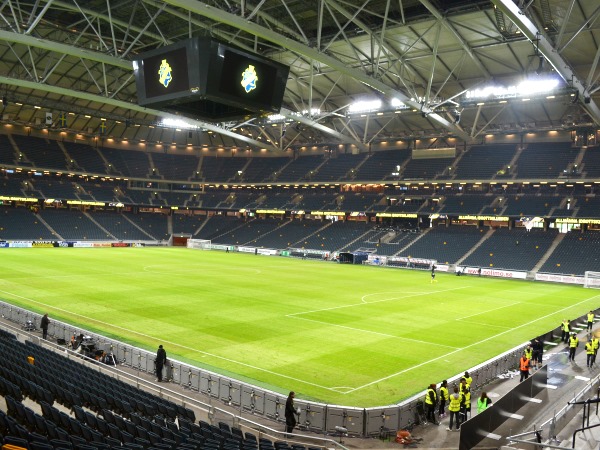
🏟️ Stadium
LEAGUE TABLE


Top Scorers
1
EB
3
E. Haaland
Norway
2
 3
3
J. Pohjanpalo
Finland
3
LW
2
L. Walta
Finland
4
MA
2
Z. Amdouni
Switzerland
5
 2
2
João Félix
Portugal
Top Assists
1
 2
2
A. Svanbäck
Finland
2
 2
2
M. Ødegaard
Norway
3
LW
1
L. Walta
Finland
4
MA
1
Z. Amdouni
Switzerland
5
JM
1
J. Moylan
Rep. Of Ireland